

Key Takeaways
- Your relationship with money isn’t a personality trait; it’s a set of neural pathways built through repetition. It’s called your money mindset, and you can rebuild it.
- Chronic financial stress measurably taxes your brain’s decision-making capacity, which is why money problems tend to create more money problems.
- Neuroplasticity research suggests it takes roughly two months of consistent practice for a new mental pattern to feel automatic.
- The five specific, science-informed practices are audit, reframe, gratitude, goal-setting, and calculated risk. They form a repeatable system for building an abundance mindset.
- Mindset work is the first domino. It only pays off when it’s paired with a real financial system, which is exactly what we built inside Unlimited Wealth Potential.
Why “Just Work Harder” Never Fixes Your Money Problems
Hey, it’s Eric J. Ramsey.
If you’ve been grinding, budgeting, hustling, cutting expenses, and you’re still hitting the same financial wall, I want you to hear this clearly:
It’s not because you’re lazy. It’s not because you’re bad with numbers. It’s because your brain is running old software.
Your money mindset is the collection of beliefs, emotional patterns, and learned responses that influence how you earn, spend, save, invest, and react when money gets uncomfortable. And those patterns aren’t necessarily permanent.
Here’s the uncomfortable truth: your brain didn’t evolve to build wealth. It evolved to keep you alive. That means it’s wired to prioritize short-term safety over long-term abundance. Unless you deliberately retrain it, you’ll keep bumping into the same invisible ceiling no matter how many side hustles you start.
But I have some good news.
Modern neuroscience shows the brain remains adaptable well into adulthood. That means your money mindset isn’t fixed. It’s trainable just like a muscle. It’s not set for life.
Let’s break down what’s actually happening in your head, and then we’ll fix it.
What’s Really Happening in Your Brain When You Think About Money
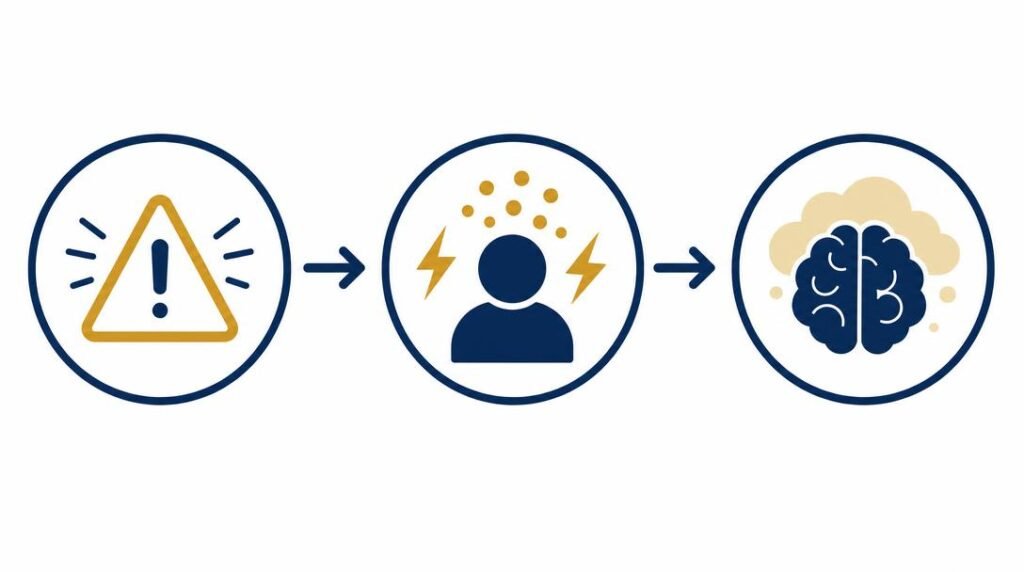
The Scarcity Response
When financial stress takes over, your attention naturally narrows toward the immediate problem.
That can make it harder to think beyond today’s emergency, weigh long-term tradeoffs, or give complicated financial decisions the mental energy they deserve.
Researchers studying scarcity have found that preoccupation with not having enough can consume cognitive bandwidth—leaving fewer mental resources for planning and decision-making.
That doesn’t mean you’re bad with money. It means financial pressure can make it harder to make good decisions. And that pattern can be interrupted.
This isn’t a character flaw. It’s biology. But biology can be retrained.
Fixed Mindset vs. Growth Mindset, and What It Costs You
Stanford psychologist Carol Dweck’s widely cited work on fixed versus growth mindset found something powerful: people who believe their abilities can develop tend to outperform people who believe their abilities are set in stone.
Applied to money, this shows up constantly:
- Fixed mindset: “I’m just not a money person.” Your brain quietly collects evidence to prove you right.
- Growth mindset: “I’m learning to get better with money.” Your brain starts hunting for the next skill, the next opportunity, the next edge.

Same brain. Two completely different financial futures — determined entirely by the story you keep telling yourself.
Why Scarcity Makes Smart People Make Dumb Decisions
Behavioral economists, including Sendhil Mullainathan and Eldar Shafir, have studied how financial scarcity affects decision-making, and the findings are striking: when people are preoccupied with not having enough, their available mental bandwidth for everything else, like planning, patience, and judgment, takes a measurable hit.
That’s why scarcity is a trap, not just a feeling:
- Tunneling: You fixate on today’s emergency and miss tomorrow’s opportunity.
- Cognitive overload: Worry consumes mental energy instead of strategy.
- Impulsive decisions: Stress hormones override patient, long-term thinking.
- Self-fulfilling prophecies: Your brain keeps finding “proof” that confirms what you already believe.
Here’s the part that matters most: research on cognitive restructuring shows these effects are reversible. You are not stuck. You’re one intervention away from a different pattern.
The 5-Step System to Rewire Your Money Mindset
This is the exact framework I use with my own coaching clients. Five deliberate practices, built on established behavior-change principles, designed to move you from scarcity to abundance.
1. Face Your Money Story Head-On
Psychiatrist Daniel Siegel’s research popularized the idea that “naming it tames it.” Consciously identifying a fear reduces its emotional grip on you.
Do this today — The Money Story Audit (20 minutes):
- What’s your earliest memory involving money?
- How did your parents or guardians talk about money growing up?
- What specific financial situation triggers your stress response fastest?
- Finish this sentence: “Money is ___.”
7-Day Practice: Each morning, write down one limiting money belief you catch yourself thinking. Awareness is step one of rewiring anything.
2. Challenge and Replace Limiting Beliefs
This is straight from cognitive-behavioral therapy, one of the most well-studied approaches in psychology for changing thought patterns.
The Reframe Process:
- Identify the thought — “I’m not good with money.”
- Examine the evidence — Is that actually provably true? Or is it a story?
- Build the alternative — “I’m actively learning to get better with money.”
- Test it with action — Take one small step that proves the new belief.
Daily Practice — The Mindset Reset: Set 3 random alarms a day. When one goes off, notice your current money thought, rate how accurate it really is, and if it’s more fear than fact, swap it for an evidence-based reframe, then take one micro-action to back it up.
3. Practice Deliberate Gratitude
Gratitude research consistently links the practice to lower stress and improved emotional regulation. This matters because a calmer brain makes better financial decisions.
Morning Practice (5 minutes):
- 3 things you’re financially grateful for right now
- 1 financial opportunity you can see today
- 1 way money has let you help someone else
Pair it with 2 minutes of slow breathing to calm your nervous system before you even open your laptop. A regulated brain outperforms a stressed one every single time.
4. Build Your Written Wealth Roadmap
Goal-setting research, most famously Dr. Gail Matthews’ study at Dominican University, found that people who write down their goals report following through significantly more often than those who just think about them.
The Roadmap Exercise:
- 10 financial goals for the next 12 months
- 10 financial goals for the next 5 years
- 10 financial goals for your lifetime
- Circle your top 3 from each list
Weekly Reinforcement (30 minutes, every Sunday): Review your goals, visualize hitting them, and plan your next week’s action steps. Repetition is what turns a goal from a wish into a plan.
5. Embrace Growth and Take Calculated Risks
Growth happens at the edge of your comfort zone, not in the middle of it.
4-Week Comfort Zone Challenge:
- Week 1: Research the investment or opportunity you’ve been avoiding
- Week 2: Ask for a raise, a discount, or a price increase in your business
- Week 3: Take one real step on a side income idea
- Week 4: Have the money conversation you’ve been putting off
Every new financial challenge you take on builds capability, and capability moves the needle, not motivation alone.
Your Daily Abundance Protocol
Stack these two short routines around your day for maximum reinforcement:
Morning (10 minutes):
- Slow breathing (2 min): calm your nervous system before the day starts
- Gratitude journaling (3 min): anchor to what’s working
- Goal visualization (3 min): mentally rehearse the win
- One abundance affirmation, said out loud (2 min)
Evening (10 minutes):
- Quiet reflection or meditation (5 min)
- Visualize one financial goal as already achieved (3 min)
- Write one thing money made possible for you today (2 min)
The 66-Day Money Mindset Challenge
Behavior-change research popularized by psychologist Phillippa Lally suggests new habits typically take somewhere in the range of two months of consistent repetition to start feeling automatic, not the “21 days” myth you’ve probably heard.
Here’s how to structure it:
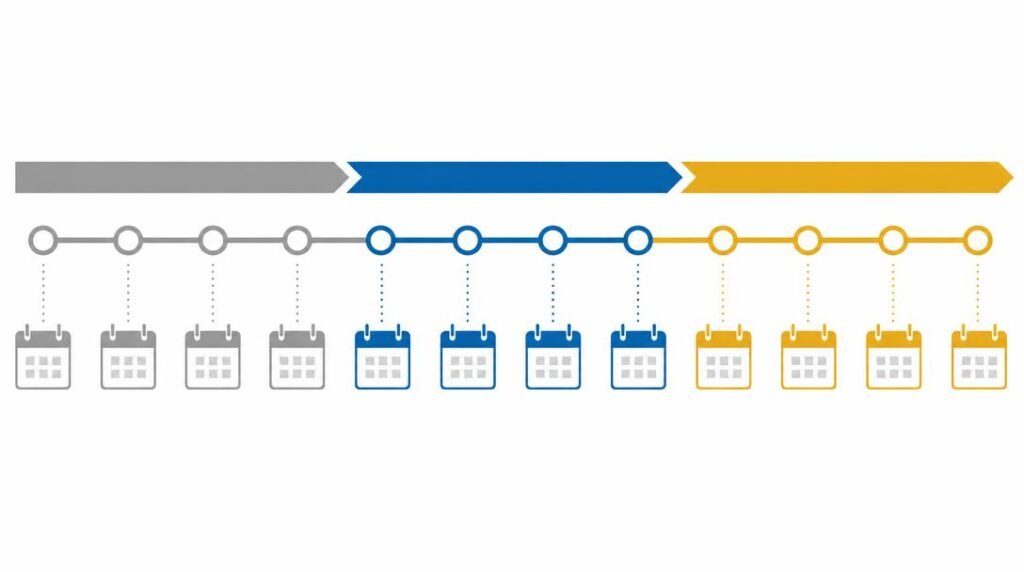
| Phase | Days | Focus |
| Disruption | 1–22 | Awareness — money story audit, belief-challenging, basic gratitude |
| Reinforcement | 23–44 | Consistency — add visualization, goal-setting, comfort-zone stretches |
| Integration | 45–66 | Automation — combine every practice; reinforce the practices until they begin feeling more natural and consistent. |
You don’t need to be perfect. You need to be consistent.
Frequently Asked Questions
Can you really change your money mindset as an adult?
Yes. Your brain can form new patterns throughout life, which is why therapy, coaching, and habit-change programs work at any age. The key is repetition, not age.
How long does it take to change a money mindset?
Most people need about two months of consistent, daily practice before a new financial habit or belief feels automatic rather than forced.
Is mindset alone enough to build wealth?
No, and this is important. Mindset removes the internal roadblocks. But mindset without a system is just positive thinking. You still need a concrete financial strategy to turn that mindset into real income and assets.
Mindset Is the Door. A System Is What Walks You Through It.
Everything above will change how you think about money.
But here’s what I’ve learned building Unlimited Wealth Potential from the ground up: mindset work without a real financial system just makes you more optimistic, with the same bank account.
You need both:
- The rewired thinking that gets you out of your own way
- The step-by-step system that tells you exactly what to do next
That’s exactly why I built The Unlimited Wealth System, a complete framework that pairs mindset transformation with two proprietary tools: the 60-30-10 Method for structuring your money, and the 4-Bucket Wealth System for building it into lasting assets.
Ready to Pair Your New Mindset With a Real System?

[👉 Take the next step — enroll in The Unlimited Wealth System now.”]
Change your thoughts. Change your actions. Change your life.
P.S. P.S. Nobody is born knowing how to build wealth. Your thinking about money is shaped by experience, repetition, education, and the actions you practice over time. Change those patterns, pair them with a real financial system, and you can begin producing very different financial results.