
You’ve heard it before: “Change your mindset and the money will follow.”
Here’s the problem. Mindset alone has never paid a single bill.
I grew up around prosperity teaching. I spent years listening to preachers and speakers who talked about unlimited abundance, and they weren’t wrong that abundance is real. But most of them stopped one step short of the truth:
Belief gets you in the game. It doesn’t win it.
You need a vehicle. A strategy. And the discipline to execute it, day after day, whether you feel inspired or not.
Several legitimate ways to build wealth exist, but they don’t all require the same capital, skills, risk tolerance, or lifestyle. The key is choosing a vehicle that fits where you are now and where you actually want to go.
That’s what this guide is: a real map of the three proven pathways people actually use to build wealth, so you can stop drifting and start driving.
Let’s build your route.
What Does “Prosperity” Actually Mean to You?
Before you pick a pathway, get honest about the destination, because “I want to be rich” isn’t a strategy; it’s a wish.
I learned this the hard way while stationed in Panama. Having running water and reliable electricity made someone the wealthiest person on their block. It reframed everything for me: wealth is relative, and it’s personal.

Most people never define it. They chase “more money” in the abstract and wonder why they never feel like they’ve arrived.
So before you read another word, answer these:
- Are you chasing monthly cash flow, or a net worth number?
- Is this about freedom, security, or your family’s legacy?
- Do you want to build an empire that demands 60-hour weeks, or a system that runs without you?
- What’s actually driving this: impact, achievement, or peace of mind?

Your answers point you toward the right pathway. Skip this step, and you’ll pick a strategy that fights against what you actually want.
The Four-Part Wealth Equation
At Unlimited Wealth Potential, I teach it like this:
Thoughts → Decisions → Actions → Habits → Systems → Wealth → Freedom
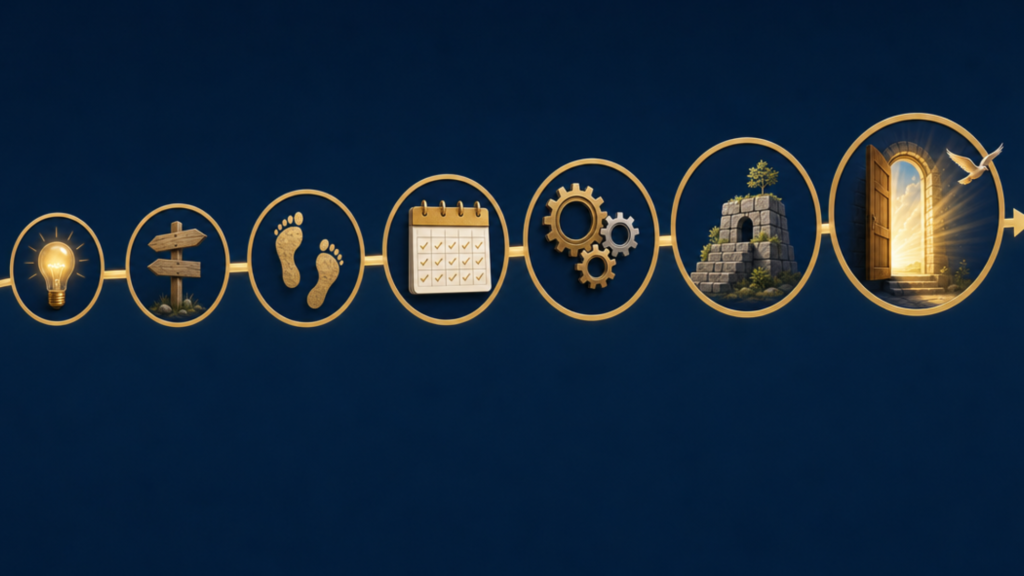
Break it down:
- Mindset gets you started. You have to believe wealth is possible for someone like you before you’ll ever move toward it.
- Strategy gives you direction. Belief without a vehicle is just wishful thinking.
- Action creates results. Nothing compounds until you execute.
- Systems create freedom. Habits that become systems are what let wealth keep building without you chained to the process.
Most “abundance” content gives you #1 and stops. Below, you’re getting the other three — starting with the three vehicles wealthy people actually use.
Pathway #1: Real Estate — Leverage and Cash Flow
Real estate remains one of the most well-established wealth vehicles because of a few structural advantages:
- Leverage — a mortgage can let you control a larger asset than your cash alone would buy
- Cash flow — rental income that, when the numbers work, can cover expenses and produce profit
- Appreciation — property values have historically trended upward over long time horizons, though this varies significantly by market and is never guaranteed
- Tax treatment — depreciation, deductions, and strategies like 1031 exchanges (talk to a CPA before relying on any of these)
- Inflation hedge — real assets can hold value differently than cash during inflationary periods

You don’t need to master every real estate strategy. You need to pick one lane and get good at it.
Five Real Estate Strategies Worth Considering

1. Real Estate Agent
Connect buyers and sellers, facilitate transactions, earn commissions. Startup costs are relatively low (licensing and marketing), but income is commission-based and heavily dependent on market conditions, work ethic, and local competition. Published industry sources show a wide gap between new agents and top producers; you build this business, you don’t get a salary. Best fit for people who genuinely enjoy sales and relationship-building.
2. Buy-and-Hold Landlord
Purchase rental property, collect rent, build equity over time. This requires meaningful upfront capital (typically a down payment plus reserves for repairs and vacancies) and carries real risks; vacancies, maintenance, and market downturns can turn “cash flow” negative fast. Run your own numbers conservatively before assuming any deal pencils out. Best for patient investors comfortable with property management or hiring it out.
3. House Flipper
Buy undervalued properties, renovate, resell. Profit potential exists, but so does real downside risk: renovation overruns, holding costs, and market timing can erase a projected profit entirely. This is one of the more capital- and skill-intensive strategies on this list, and it is not passive. Best for people with construction knowledge or a reliable contractor network.
4. Private/Hard Money Lender
Lends capital to other real estate investors at interest. This can generate strong returns relative to traditional savings vehicles, but it requires significant capital and carries default risk; your security depends on your collateral position and the borrower’s project. Best for investors with capital who understand underwriting.
5. Commercial Real Estate Investor
Office, retail, or industrial property, often via syndication with other investors. Higher capital requirements, longer timelines to profitability, and more complexity, but potential for strong cash flow and professional, longer-term tenants. Best for experienced investors or those partnering with an experienced sponsor.
Pathway #2: Internet Marketing — The Digital Business Playground
This is my world. The appeal is real: you can build a business from a laptop, reach a global audience, and scale without the overhead of a traditional company.
Here’s what I learned the hard way: this space is enormous, and trying to do it all is how you go broke busy. Pick one model. Get world-class at it before you add a second.

Seven Digital Business Models
1. Digital Products (Courses, Ebooks, Memberships)
Package your expertise into something sellable. Digital products can scale profitably because there’s no inventory and low marginal cost per sale. But building an audience that trusts you enough to buy takes time and consistent value. Best for people with a teachable skill or hard-won experience.
2. Affiliate Marketing
Promote other people’s products, earn a commission. Lower startup cost than building your own product, but you’re dependent on someone else’s offer and commission structure. Best for people who’d rather market than create.
3. Content Monetization (Blogging/YouTube)
Build an audience through consistent, valuable content; monetize through ads, sponsorships, and your own offers. This is a long game; meaningful income typically takes sustained output over many months before traction builds. Best for natural teachers and storytellers.
4. Paid Traffic / Media Buying
Buy traffic, send it to a converting offer, profit on the margin. This can scale fast, but can lose money just as fast if you don’t understand your numbers cold. Treat ad spend as tuition until you have a proven, repeatable formula. Best for analytical, numbers-first operators.
5. Email Marketing Systems
Build a list, deliver consistent value, sell strategically. An engaged list is one of the most durable business assets you can own, but “building a list” and “building a list that buys” are very different skills. Best for relationship-first communicators.
6. E-Commerce
Sell physical products via Shopify, Amazon, or print-on-demand. Real profit potential, but also real complexity: sourcing, inventory, fulfillment, ad costs, and thin margins in competitive categories. Best for people comfortable with logistics and product-market fit testing.
7. High-Ticket Coaching/Consulting
Monetize your expertise directly by helping others get results. Often the fastest path to revenue for someone with proven experience, since you’re selling transformation, not a $27 download. Best for experts who can point to real, documented outcomes.
Pathway #3: Traditional Investing — The Steady Builder
Real estate and digital business can move fast. Traditional investing plays a different game: compound growth over time.

Stock Market Investing
Historically, broad-market index investing has delivered solid average annual returns over multi-decade periods, but past performance never guarantees future results, and any given year (or several years) can be flat or negative. Index investing requires minimal ongoing effort; dividend and growth strategies require more research and carry more volatility. Best for patient, hands-off, long-horizon investors.
Business Ownership / Franchising
Buying into a franchise system or an existing business gets you established systems and often faster cash flow than starting from scratch, but it also means significant capital at risk and operational responsibility. Best for entrepreneurs who want a proven playbook rather than a blank page.
None of the above is financial or investment advice. Talk to a licensed financial advisor before making investment decisions — Eric J. Ramsey and Unlimited Wealth Potential are not licensed financial advisors.
How to Choose Your Pathway
Real estate may fit if: you have meaningful upfront capital, you’re comfortable with leverage and debt, and you think in decades, not months.
Internet marketing may fit if: your startup capital is limited, you’re comfortable learning new digital skills fast, and you want location independence.
Traditional investing may fit if: you have steady income to invest consistently, you prefer a hands-off approach, and you’re building toward a long-term horizon like retirement.
The truth most wealthy people will tell you? They don’t pick just one forever. They start with one primary focus, get it producing, and reinvest into the others over time. Diversification isn’t just a portfolio strategy. It’s a wealth-building strategy.
Your 90-Day Action Plan
You don’t need a five-year plan today. You need your next 90 days.

Days 1–30: Foundation
- Week 1: Choose your primary pathway based on your capital, skills, and goals.
- Week 2: Set up the accounts, tools, and systems you’ll need.
- Week 3: Begin focused education in that one lane, not five.
- Week 4: Take your first real action.
Days 31–60: Implementation
- Execute your strategy consistently, even when it’s unglamorous.
- Track your results honestly. Numbers don’t lie, feelings do.
- Aim for your first small proof point, whatever that looks like in your pathway.
Days 61–90: Acceleration
- Double down on what’s working, cut what isn’t.
- Map your next level of growth.
- Set a specific, honest target for the next 6 months, not a guess, a plan.
The Bottom Line
Money doesn’t fall from the sky no matter how hard you visualize it. Anyone telling you otherwise is selling something.
What actually moves the needle:
- A proven vehicle — real estate, digital business, or traditional investing.
- A specific strategy inside that vehicle — not “buy real estate,” but a defined approach you can execute.
- Relentless, consistent execution — because a mediocre plan worked hard beats a perfect plan left on the shelf.
The pathways are in front of you. The only open question is which one you’re going to walk — and when you start.
Frequently Asked Questions
What’s the fastest way to build wealth?
There’s no universal “fastest” path. It depends on your starting capital, skills, and risk tolerance. Digital business models often have the lowest barrier to entry, while real estate and traditional investing typically require more upfront capital but can offer different risk/return profiles. Speed also usually trades off against risk, so be wary of anyone promising fast wealth with no downside.
How much money do I need to start building wealth?
It varies dramatically by pathway. Some digital business models can start with a few hundred to a few thousand dollars for tools and marketing. Real estate and traditional investing typically require more meaningful capital, though strategies like house hacking or dollar-cost averaging into index funds can lower the entry point.
Can I pursue more than one wealth-building pathway at once?
Most experienced wealth-builders eventually diversify across multiple vehicles, but trying to start multiple pathways at once as a beginner usually leads to shallow progress in all of them. Get one producing real results first, then expand.
Is mindset really that important, or is it overhyped?
Both are true. Mindset without strategy and action produces nothing, but strategy and action without the belief that this is possible for you will cause most people to quit before results show up. You need all four: thoughts, decisions, actions, and systems.
Ready for Your Personal Roadmap?
This guide gave you the map. If you want the step-by-step playbook — the exact framework I use to help people move from scattered effort to a real wealth-building system — grab the free guide below.

👉 [Download “Unlimited Wealth Potential” — Free Guide]
Prefer to watch it play out? Subscribe to Unlimited Wealth Potential on YouTube for weekly, no-fluff breakdowns on money, mindset, and building real financial freedom.
Your prosperity journey starts with one decision. Make it today.
Change your thoughts. Change your actions. Change your life.
Earnings and results mentioned throughout this article are illustrative and not typical. Any income, profit, or return figures reflect a range of possible outcomes based on general industry information, not guarantees or promises of specific results. Real estate, business ownership, and investing all involve risk, including the potential loss of principal. Individual results depend on effort, market conditions, capital, skill, and circumstances outside anyone’s control. This content is for educational purposes only and is not financial, legal, tax, or investment advice. Consult a licensed professional before making financial decisions.