
You believe God wants you to prosper. You’ve prayed over your finances. You’ve confessed the promises. You’ve stood on the Word.
So why is your bank account still telling a different story?
That’s where faith-based wealth building has to go beyond belief alone. Faith matters, but building wealth also requires wisdom, stewardship, financial education, and action.
I’m Eric J. Ramsey, founder of Unlimited Wealth Potential, and I want to have the conversation most churches skip. Not whether God wants you blessed (He does). The real question is: why do so many faith-filled believers stay stuck financially, even while they believe?
I’ve sat on both sides of this. I grew up under Word of Faith teaching — Kenneth Hagin, Fred Price, Kenneth Copeland. I was leaning hard into “believe it and receive it.” Then Bible college handed me the opposite: a heavier, more sovereignty-driven view of how God moves. Both sides taught me something. Neither side, on its own, paid a single bill.

Here’s what I’ve learned: faith without a plan is a prayer without a follow-through. Let’s break down what’s missing, and more importantly, what to do about it.
Calvinism vs. Arminianism: Why This Debate Matters for Your Wallet
This isn’t just theology-nerd territory. It shapes how you think about your money.
- Lean too far Calvinist, and it’s easy to slide into passivity. “God’s already decided, so why act?”
- Lean too far Arminian, and you can overcorrect into believing it’s all on your shoulders, treating faith like a formula you can perfect to get wealthy.
Both extremes miss the same thing: God works through your decisions, not instead of them.

The balance between sovereignty and responsibility is where real financial breakthrough tends to live.
What Prosperity Theology Gets Right
Let’s give credit where it’s due. The Word of Faith movement did something important: it gave believers permission to want more.
Scripture backs up the idea that abundance isn’t something to be ashamed of. Faith teachers built entire ministries around a simple truth. God isn’t glorified by your poverty. That message freed a lot of people from guilt around wanting financial security.
Here’s the gap: believing for wealth and building wealth are two different skill sets. Millions of Christians hold onto that belief while still carrying poverty-mindset habits, zero financial education, and no actual wealth-building strategy. Belief was never meant to replace a financial plan. It was meant to fuel one.
Where the Word of Faith Movement Gets Misunderstood
Kenneth Hagin didn’t come from formal theological training. He built a movement by taking Mark 11:24 at face value and living it out. This is why the movement is both praised and picked apart.
Critics point to Galatians 1:6-9 and call it “another gospel.” And to be fair, faith divorced from wisdom has led some people to make genuinely harmful choices, like outright rejecting medical care.
But plenty of others point to real turnarounds, financial and otherwise, that they credit to this teaching.
The core of Prosperity Theology comes down to two claims:
- Healing reflects God’s will; sickness doesn’t originate from Him.
- God desires prosperity for His people.
Whatever your view on the theology, here’s the practical question that actually matters: if prosperity is available, what’s the bridge between believing for it and building it?

What’s Actually Missing: Two Mindsets Most Prosperity Teaching Skips
I’m not here to talk anyone out of believing big. I am here to tell you belief alone won’t move the money. Two things close that gap.
1. The Millionaire Mindset: Understanding How Wealth Actually Gets Built
Notice something: a lot of the wealthiest people on earth aren’t prosperity-gospel churchgoers. They’re not wealthy because of what they believe. They’re wealthy because of how they think and what they do with money.
Proverbs 13:22 says the wealth of the sinner is stored up for the righteous. Fair question: if that’s true, why isn’t more of it in believers’ hands?
Because wealth follows understanding, not just intention. The wealthy tend to share a few habits in common:
- They think about money differently, as a tool to direct, not just a thing to hope for.
- They invest instead of only saving.
- They treat financial literacy as non-negotiable.
- They surround themselves with mentors and people ahead of them.

Romans 12:2 calls believers to be “transformed by the renewing of your mind.” That renewal isn’t just spiritual. It applies directly to how you think about money. Faith without financial wisdom keeps people stuck in the same cycle, year after year. Faith paired with wisdom and action is what actually moves the needle.
2. The Entrepreneurial Mindset: Taking the Action That Faith Was Meant to Fuel
Real financial change requires more than declarations. Look at Psalm 1:3 closely:
“Whatever he does shall prosper.”
The operative word is does. Not says. Not believes. Does.

Money moves through people, opportunity, and action, that’s simply how it tends to flow. Even the largest ministries aren’t waiting on unexplained deposits; they’re run with budgets, strategy, and business fundamentals.
If you’re tired of stretching one paycheck to the next, entrepreneurship in whatever form that fits your life is usually the vehicle, not a lightning bolt.
Breaking the Paycheck-to-Paycheck Cycle: Ask Yourself This

A single job, on its own, rarely builds lasting wealth on its own timeline. If you’re in that cycle right now, a few honest questions can point you toward the exit:
- Do you have a side income stream, even a small one?
- Are you actively working toward more than one source of income?
- Are your skills sitting idle, or are you turning them into something that pays?
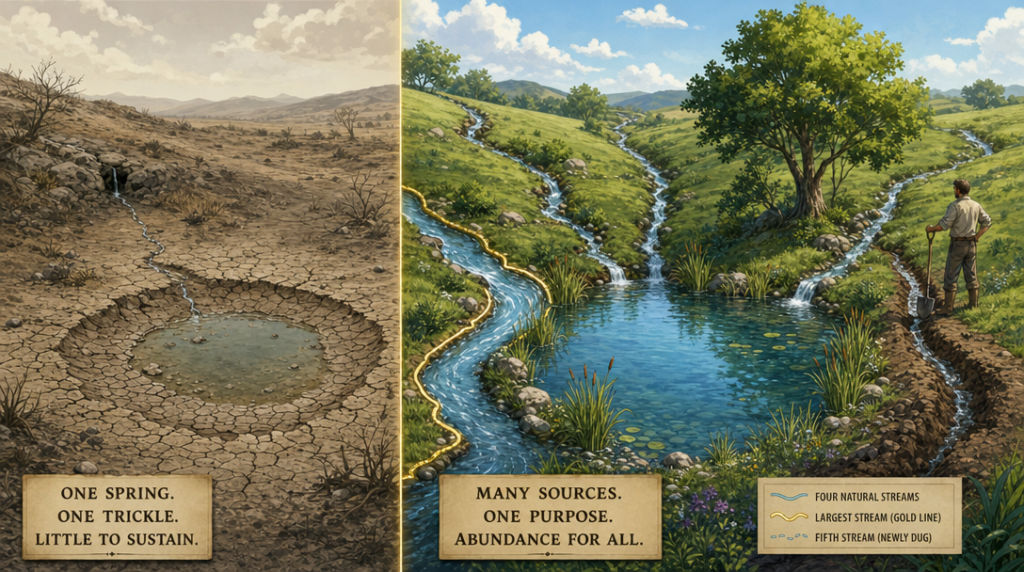
Financial breakthroughs tend to follow a strategy, not a wish. That’s the piece most prosperity teaching leaves you to figure out on your own.
Faith + Action: Where Real Change Starts
I’m not knocking prosperity theology. I believe God wants His people to walk in abundance. But I also know from experience, mine and countless others’, that faith by itself isn’t a financial plan. It’s the fuel. Wisdom and action are the vehicle.
If you’re ready to close that gap for yourself, I put together a free resource to help you start:
📥 Get “The Believer’s Guide to Faith-Based Wealth.” It’s Free
Inside, you’ll find:
✅ How to apply biblical principles to your financial decisions
✅ How to build the mindset that tends to precede financial growth
✅ Practical starting points for creating more than one stream of income
[Download Your Free Copy Now →]
Your Faith + Your Action = Your Potential
If your finances have felt stuck, here’s the shift:
Faith matters.
But faith paired with action is what tends to open doors. Opportunity is usually the vehicle blessing moves through, not a replacement for it.
The next financial decision in front of you is yours to make.
Ready to close the gap between what you believe and what you’re building?
👉 [Download “The Believer’s Guide to Faith-Based Wealth” Now]
Your next step starts with one decision. Make it today.