

You’re making more money than you did five years ago.
But somehow, you’re not any better off.
The math should work. But it don’t.
Money hits your account on Friday. By Monday, you’re already calculating what you can’t afford this week.
And here’s the part that stings the most. You seem to be doing everything “right.” Working hard. Paying your bills. Not being reckless with your money.
But you’re still living paycheck to paycheck.
If you’ve been wondering how to stop living paycheck to paycheck, the answer isn’t another temporary money hack. You have to change the financial system that’s producing the same result month after month.
Let me explain:
The paycheck-to-paycheck cycle isn’t always just about how much you make. Often, it’s also about the invisible system running in the background of your financial life.
More income can absolutely help. But without a system for directing that income, even a bigger paycheck can disappear just as quickly.
Change your thoughts about that system. Change the decisions you make inside it. Change your actions. And the results change with them.
I want to show you exactly how — step by step.
Why Smart, Hard-Working People Stay Stuck

Most financial advice is way too generic. It says “just make more money” or “stop buying coffee.”
Neither works. Because the real problem isn’t one thing — it’s three things compounding at once:
1. No financial structure
Money flows in with no plan for where it goes. So it goes everywhere.
2. Reactive spending
You’re not making bad choices, YOU’RE MAKING NO CHOICES. You’re reacting to whatever shows up instead of deciding in advance.
3. Income that doesn’t grow
Expenses creep up every year. Income stays flat. The gap tightens.
Stack those three together and you get the cycle.
But, I have some good news.
You don’t need to fix everything. You need to fix the system. That’s the whole game. That’s exactly why I built Unlimited Wealth Potential around identity and systems first, tactics second.
The 5-Step System to Break the Paycheck-to-Paycheck Cycle
Step 1 — Face Your Numbers (Without Judgment)

Most people avoid this step because they’re afraid of what they’ll find.
But you can’t fix what you refuse to look at.
Pull your bank statements and credit card bills. Then answer three questions honestly:
- How much do you actually earn each month, after taxes?
- How much do you actually spend? Not what you think you spend.
- Where is it going? (Categories, patterns, surprises.)
This isn’t about shaming yourself. It’s about getting clarity.
Once you see the full picture, you stop guessing and start deciding. That’s the first Decision that changes everything downstream.
Step 2 — Build a Money System You’ll Actually Use

Forget complicated budgets with 47 categories nobody sticks to.
You need something simple enough to follow on a bad day. A starting framework:
- 50% — Essentials. Rent, groceries, utilities, transportation. The non-negotiables.
- 20% — Future You. Savings, investing, debt payoff. This is the bucket that actually breaks the cycle.
- 20% — Flexibility. Unexpected expenses, because life happens.
- 10% — Fun. Yes, fun. A system you hate is a system you’ll abandon.
Adjust the percentages to fit your reality, but keep the structure. A simple system you follow beats a perfect system you quit.
Step 3 — Plug the Financial Leaks

You’re not bad with money. You’re just losing it in places you’ve stopped noticing.
Common leaks worth auditing:
- Forgotten subscriptions (a few small charges add up fast over a year)
- “Just this once” purchases that quietly happen every week
- Convenience spending — delivery fees, last-minute buys
- Autopilot expenses you’ve never actually questioned
None of these feel like a big deal on their own. Together, they’re quietly stealing your progress.
Cancel a few subscriptions. Skip a couple of impulse buys a week. Small leaks, plugged consistently, can meaningfully change your monthly breathing room.
Step 4 — Increase Your Income (This Is Where It Gets Real)

You can only cut so much. Eventually, the math only works if you earn more.
Here’s the truth most people don’t want to hear: increasing your income is more accessible than you’ve been led to believe. You don’t need a new degree. You don’t need to quit your job. You need to start thinking like someone with multiple income streams, because that’s a learnable skill, not a personality trait.
Directions worth exploring:
- Freelancing existing skills (writing, design, admin work, coaching)
- Selling digital products (templates, guides, courses)
- Affiliate marketing — recommending products and tools you already use and trust
- Consulting or coaching a small number of clients
- Part-time remote work (support, data entry, tutoring)
Pick one. Learn it. Get your first result, however small. Then scale it.
Results depend entirely on the effort, skill, and consistency you bring — there’s no autopilot income switch. But a second stream, even a modest one, changes the math. It’s the difference between surviving on one source and building on several.
Step 5 — Protect Your Momentum

This is where most people fail.
They start strong. Make some progress. Then one bad week hits and they slide right back to zero.
Why? Because they treated it like a sprint instead of a system.
Build momentum protection into the plan:
- Automate savings — move money before you’re tempted to spend it
- Track weekly, not daily — give yourself room to breathe
- Celebrate small wins — progress fuels more progress
- Plan for setbacks — life will happen; build flexibility in from the start
The goal was never perfection. It’s direction.
Keep moving, even slower than you wanted. That’s how the cycle actually breaks — Habits become Systems, and Systems produce Wealth on their own.
The Mindset Shift That Makes It Stick
If your mindset doesn’t change, your results won’t either.
You have to move from:
- Reacting to money to managing money.
- Short-term survival to long-term strategy.
- “I can’t afford it” to “How can I afford it?”
- Fixed income thinking to growth income thinking.
This shift is subtle. But it’s everything that keeps you moving when progress feels slow and invisible.
Mistakes That Will Keep You Stuck
Watch for these:
- Trying to change everything at once. Pick one lever. Master it. Then add the next.
- Being too restrictive. A plan with zero room for life gets abandoned within weeks.
- Ignoring income growth. Cutting expenses only gets you so far — eventually you have to earn more.
- Expecting overnight results. Real, felt change typically takes months of consistency, not days. Speed doesn’t matter. Direction does.
Your 30-Day Action Plan
- Week 1 — Get clear. Track every dollar. Face your numbers. No judgment.
- Week 2 — Build the system. Set up your simple money structure. Automate what you can.
- Week 3 — Cut the leaks. Cancel subscriptions. Identify patterns. Plug the holes.
- Week 4 — Start earning more. Pick one income idea. Research it. Take the first real step.
One month. Four moves. Real, compounding progress.
Frequently Asked Questions
Why do I still live paycheck to paycheck even with a good income?
Because income alone doesn’t fix a broken system. Without structure, more money just means more spending finds a way to fill the gap. The fix is building a financial system, not just making more money.
How long does it take to break the paycheck-to-paycheck cycle?
Most people need several months of consistent habits before it feels real, though the underlying decisions start compounding immediately. Direction matters more than speed.
What’s the fastest way to stop living paycheck to paycheck?
Start with Step 1. Get full clarity on what’s actually coming in and going out. You can’t build a system around numbers you’re avoiding.
Is a 50/20/20/10 budget realistic for everyone?
It’s a starting framework, not a rulebook. Adjust the percentages to your real income and expenses. The structure matters more than the exact numbers.
Final Thoughts
Breaking the paycheck-to-paycheck cycle was never about one big move.
It’s about better decisions, better systems, and staying consistent long enough for the compounding to show up.
At first, progress feels invisible. Then something shifts.
You stop panicking when a bill comes in. You start watching your savings grow. You feel options opening up.
You move from Stressed → Stable → Growing.
That’s how financial freedom actually starts. Not with a windfall. With a system.
Ready to Build Your System?
Don’t try to figure this out from scratch alone.
You don’t have to stay stuck in the same financial cycle. Getting ahead starts with changing the way you think about money, the decisions you make with it, and the habits you repeat every month.
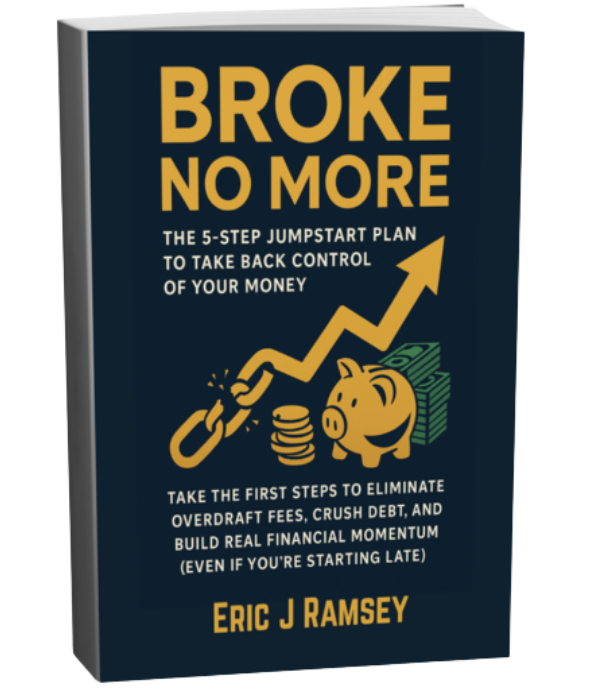
No fluff. No hype. Just a practical framework built for people who are done staying stuck.
Also, subscribe to Unlimited Wealth Potential on YouTube for weekly, no-fluff breakdowns on money, mindset, and building real financial freedom.